


We’ve all heard about how money doesn’t buy happiness. I don’t know, I’m pretty happy when I can use money to buy a plane ticket and take a vacation or purchase those concert tickets that I want.
We’ve also heard that money doesn’t buy championships. The other three major North American professional sports have salary caps, so it’s hard to really apply that notion to those, but we can look at what it means in the context of Major League Baseball. (At least until we get a salary cap and salary floor in the next CBA negotiations!)
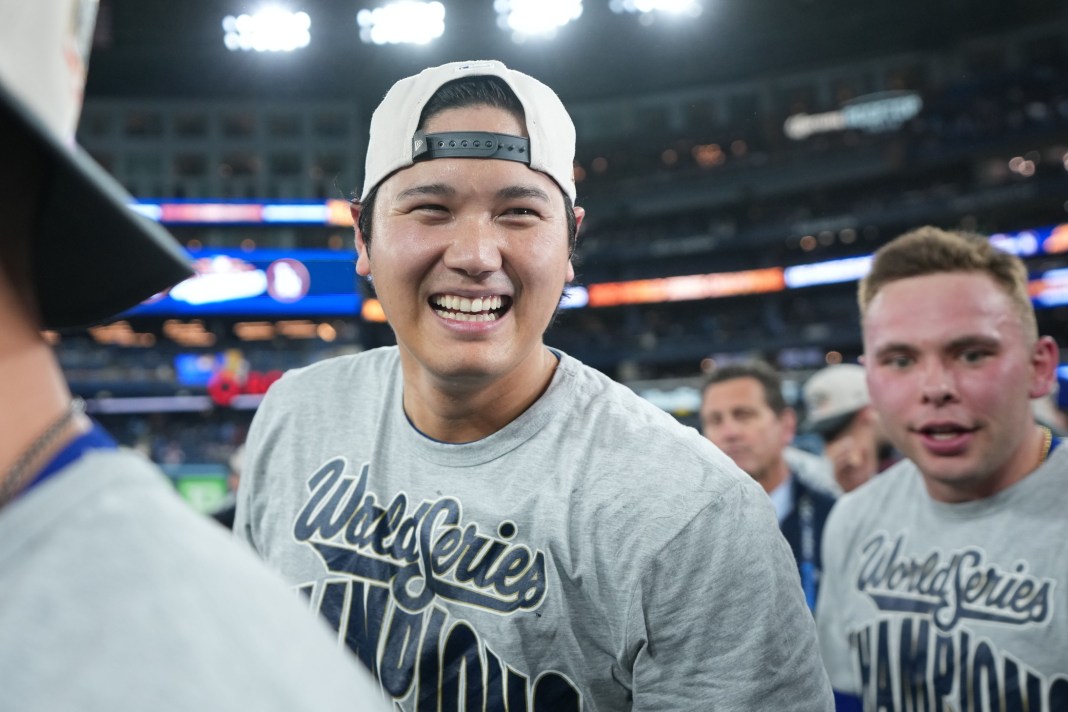
Objectively, no, money does not buy championships. Dating back to 2011, the most expensive roster in baseball has lifted the Commissioner’s Trophy just three times and two of them have been the Dodgers over the last two seasons. But, one thing that we can state is that spending more money than the majority of teams does increase your chances of playing for a championship.
Jensen Lewis, my co-author on this year’s MLB Team Previews and co-host of VSiN By The Books, actually had an interesting page in his Google Doc of writeups highlighting the payroll ranks of teams to make it to the World Series, with a side-by-side comparison of the winner and the loser. It was just in there. I don’t think it was meant to be the catalyst for a featured article in this year’s publication, but it can be something of a north star for those looking to get involved in the World Series futures market.
World Series Winner & Runner-Up Payroll Ranks
- This is the Opening Day 40-man, taxable roster payroll
- Total payroll in millions
| Year | WS Winner | Payroll Rank | Total Payroll | WS Loser | Payroll Rank | Total Payroll | |
| 2012 | Giants | 5th | 160.4 | Tigers | 8th | 145.2 | |
| 2013 | Red Sox | 3rd | 177.8 | Cardinals | 10th | 138.6 | |
| 2014 | Giants | 7th | 179.8 | Royals | 19th | 111.0 | |
| 2015 | Royals | 11th | 152.1 | Mets | 21st | 122.7 | |
| 2016 | Cubs | 4th | 205.9 | Indians | 21st | 117.6 | |
| 2017 | Astros | 19th | 140.5 | Dodgers | 1st | 253.6 | |
| 2018 | Red Sox | 1st | 239.5 | Dodgers | 4th | 195.0 | |
| 2019 | Nationals | 6th | 201.2 | Astros | 5th | 203.8 | |
| 2020 | Dodgers | 5th | 204.7 | Rays | 27th | 89.9 | |
| 2021 | Braves | 13th | 172.6 | Astros | 7th | 206.6 | |
| 2022 | Astros | 9th | 210.7 | Phillies | 4th | 244.4 | |
| 2023 | Rangers | 8th | 242.1 | D-Backs | 19th | 154.6 | |
| 2024 | Dodgers | 1st | 353.0 | Yankees | 3rd | 316.2 | |
| 2025 | Dodgers | 1st | 417.3 | Blue Jays | 5th | 286.1 |
- Data from Spotrac
The average payroll rank of the last 14 WS champs is 6.6 with an average payroll of $218.4 million.
The average payroll rank of the last 14 WS runners-up is 11.0 with an average payroll of $184.7 million.
As you can see, we’ve only had three teams outside the top 10 and only one outside the top half of the league in payroll as the champion of October baseball. We’ve had more outliers get there and lose, including five teams in the bottom half of the league, but we’ve only had one World Series out of the last 14 with two teams outside the top 10 in payroll.
None of this data is shocking, though I guess it is somewhat shocking to only see the team with the highest payroll in the World Series four times in this data set and the No. 2 team in payroll nowhere to be found. But, as you think about the futures market for 2026, longer shots that have still been willing to spend some money are probably better investments than young teams on the come-up that look promising and tantalizing.
2026 World Series Futures Odds
- LA Dodgers +230
- NY Yankees +950
- SEA Mariners +1300
- TOR Blue Jays +1400
- PHI Phillies +1400
- NY Mets +1400
- BOS Red Sox +1500
- ATL Braves +1600
- CHI Cubs +1800
- HOU Astros +2200
- BAL Orioles +2200
- DET Tigers +2500
- MIL Brewers +2800
- SD Padres +2800
- TEX Rangers +3000
- KC Royals +4000
- CIN Reds +4000
- CLE Guardians +5000
- ARI Diamondbacks +6500
- SF Giants +6500
- TB Rays +9000
- MIN Twins +10000
- Athletics +10000
- PIT Pirates +10000
- MIA Marlins +20000
- STL Cardinals +20000
- LA Angels +25000
- COL Rockies +50000
- CHI White Sox +50000
- WAS Nationals +50000
Odds from DraftKings Sportsbook as of Feb. 10
Detroit Tigers +2500
The Tigers look to be cracking the top 10 here with Tarik Skubal victorious in arbitration and then more than $50 million for Framber Valdez and Justin Verlander. That’s not what pushes them over the edge for me, though those are some very valuable innings to add to the picture. What is really nice, and what we see with a few of the lower payrolls on there is that they’ve been teams capable of winning a bad division and then making a run, like the Indians in 2016 and Royals in 2015.
The Tigers have a playoff-worthy pitching staff and any offensive gains will help, plus it appears as though Christopher Ilitch is at the point where he’s ready to spend after cutting a lot of pork from the payroll when his father, Mike, went all-in to try and get a title before he passed away. That also means perhaps going out and buying a more expensive Trade Deadline piece as well as they have maybe the easiest path to the postseason in the AL Central.
Boston Red Sox +1500
I like this one less because the path to the postseason is much tougher to navigate, as the Yankees and Blue Jays look strong again, plus the Orioles could be an improved team and the Rays are always pesky. But, this is an ideal confluence of high-priced talent with pre-arb and early-arb up-and-coming talent.
Expensive players are often older with more extensive track records, but higher injury risk profiles. That’s why a team needs to be able to have cheap, preferably internally-developed replacements waiting in the wings. In that respect, the Red Sox are in great shape, in that their highly-paid players aren’t that old, but there are plenty of options to fill in the gaps. Boston has also produced additional payroll flexibility by locking in guys like Roman Anthony and Kristian Campbell to long-term surplus value deals that are likely to make the books look way better than they are because of the future equity. That often leads to purchasing power at the Trade Deadline.
So, keep in mind that while money doesn’t necessarily buy a championship, it surely gives you a much better chance at playing for one.