


For years, we have watched some of the league’s worst teams perform at a middle-school level in hopes of improving their chances of landing one of the top picks in the NBA Draft.
Last season was especially ugly. After the All-Star break, the Wizards went 3-26, the Jazz 4-22, the Pacers 4-23, and the Grizzlies 5-24. Sure, some of those teams were either banged up or flat-out bad. However, they also had every reason to lose. In fact, the league came down on some of them. Utah was fined $500,000 and Indiana $100,000 for suspicious roster management. At the same time, one can argue the nonsense was worth it. The Pacers lost their pick to the Clippers, but the Jazz got the No. 2 selection and added a potential franchise-changing guard in Darryn Peterson. Meanwhile, the Wizards secured the top selection and landed a high-quality wing in AJ Dybantsa. Washington didn’t quite bend the rules like others, but Carlton “Bub” Carrington recently said the team was “held back just because we were trying to get AJ Dybantsa. That’s no secret.”
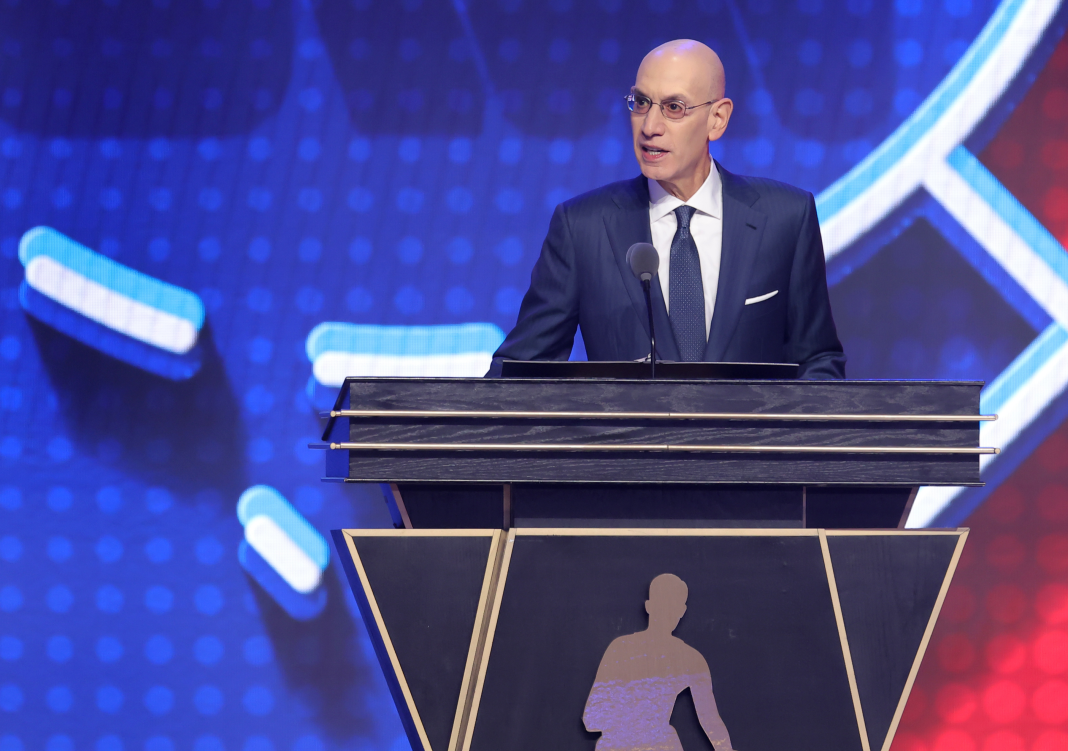
All of this put a stain on the league, so NBA commissioner Adam Silver set out to find a solution.
The new “3-2-1 Lottery” will be in effect for the next three seasons. Here’s what it looks like:
- The lottery expands from 14 teams to 16.
- Teams that miss the playoffs and the Play-In get flatter odds.
- The three worst teams are “relegated” and lose a lottery ball. They can fall no further than No. 12.
- No team can pick first in consecutive drafts.
- Newly traded picks can’t carry heavy protections.
- The league office can alter lottery odds, move a team’s draft slot, and dish out heavy fines for tanking.
Losing the most games used to get you a better shot at drafting a franchise player. Now it can get you a worse pick and a scary call from the league office.
Teams have already adjusted. Washington might have deliberately tanked last season, but it also traded for Trae Young and Anthony Davis in hopes of turning things around in 2026-27. At the time, I called those “win-later” deals. Then, in the offseason, the Wizards added productive veterans in Khris Middleton and Deandre Ayton, signaling a desire to win games and possibly give their young core a taste of the postseason. That change in roster construction has Washington’s win total at 35.5, a sizable jump from last year’s 21.5.
We also saw the Nets, normally a team content to finish near the bottom, take on Julius Randle’s salary. That was a cost-cutting move for Minnesota, and Brooklyn received a pick for absorbing him. Still, Randle averaged 21.1 points, 6.7 rebounds, and 5.0 assists per game last year, and the team surely views him as a piece who can keep it out of the relegation zone.
Even Chicago can be viewed as an example. The Bulls looked to be finally embracing a youth movement: They changed up the front office, hired Tiago Splitter as head coach, and added Caleb Wilson to an impressive young core. Chicago easily could have used this season to throw the kids out there and let them make mistakes. Instead, the Bulls brought in veteran Norman Powell, a perfect fit as a floor-spacing two-guard, to help right away.
The big question now: How will this impact betting? My view is that taking a close look at Overs on the league’s lowest totals could be a great place to start. Winning games at a 20% clip in the second half of the season is no longer beneficial to teams. Even for a team like Sacramento, that could be the difference between winning 19 games and winning 25.
This could also make some Unders more enticing. In each of the last three seasons, we have seen elite teams flirting with 65+ victories. Will that remain the norm with fewer freebies on the schedule?
I’d also look to get aggressive with some middle-of-the-pack teams you’re looking to fade. For me, that’s a team like the Blazers. With so many question marks in the backcourt, are we 100% sure Portland is head-and-shoulders above some of the teams with lower win totals? In recent seasons, the Blazers have had their foot on the gas while other teams have backed off. What if an increase in league-wide competitive spirit completely changes the way we view everyone?
Injuries are the obvious exception. Indiana’s collapse started with the torn Achilles Tyrese Haliburton suffered in the NBA Finals two years ago. However, last season spiraled with injuries to other key players, and the new rules can’t fix that.
Teams ranked fourth through 10th worst also keep their lottery odds, so there’s a chance we see a lighter tank as the picture clears up late in the season.
Still, if the rules work, we should see some surprising overachievers, and we’ll also see some major disappointments. The oddsmakers obviously tried to bake this in as best they can. If we’re thinking of something, they’re doing the same — and likely doing it much better. But Year 1 is the right time to see if we can find an edge.